

Encounters That Change Who We Are

The Growth Made Possible Through Uranus, Neptune, and Pluto

There are encounters in life that are so rare, so intense, and so mysteriously charged that they do not feel like ordinary relationships at all. They arrive with a sense of inevitability, as though the unconscious has been preparing for them long before the two people meet. Astrologically, these encounters are often accompanied by transits from the transpersonal planets — Uranus, Neptune, or Pluto — because something larger than personal desire is attempting to break through. The relationship becomes more than companionship, attraction, or compatibility. It becomes an initiation into another level of consciousness, often through love.
The birth chart does not describe a finished personality, but the seeds and potentials we are born carrying. Some qualities emerge naturally and early, while others remain dormant until life brings the right relationship, conflict, teacher, loss, or experience to awaken them. Knowing that a potential exists astrologically is very different from recognizing it psychologically and learning to express it consciously. The unconscious often places our undeveloped qualities before us through another person so that we can see them, admire them, desire them, fear them, or even condemn them before we are capable of recognizing them as part of ourselves.
Think back to the people you met that you will never forget. There usually was an intensity at the time that seemed disproportionate to how well we actually knew the person. They may even remain in our thoughts for months or even years and what at the time we thought was a chance meeting was actually an important part of our fate. I’ve come to understand there is no such thing as chance. We are destined mainly through our energy field to meet the unconscious aspects of ourselves time and time again.
Someone else may barely notice the person who has such a powerful effect upon us. Because we do not yet recognize the awakened quality as our own, we experience it as belonging entirely to them. They appear to possess the courage, authority, freedom, intelligence, creativity, or spiritual depth that has not yet become conscious within us. They become the carrier of something we were born with as potential but have not yet developed as part of our own unique personality. We believe we are responding only to who they are, when we may also be responding to who we are capable of becoming.
This is one reason fascination is such an important psychological signal. The person may be brilliant, talented, charismatic, or powerful in objective ways, but the extraordinary intensity of our response belongs to us. Someone else may admire or enjoy the same person without becoming preoccupied with them. The question is not only, “What is so remarkable about this person?” but also, “What truth is trying to emerge in myself from knowing them?” It can take decades before we begin to fully understand what the meeting activated within our own psyche.
The Anima and Animus are two figures that stem from the collective unconscious, even though they acquire personal characteristics through our individual history, parental images, relationships, and culture. This is why our projections can feel so much larger than the actual person carrying them: an ordinary human being has become the carrier of an archetypal dimension. The most important aspect of these encounters, however, is the possibility of transformation that arises when we reflect deeply upon what the experience was introducing us to.
Transpersonal Planets Give the Encounter Meaning
In Astrology, encounters of this magnitude often coincide with powerful transits from Uranus, Neptune, or Pluto. These planets are called transpersonal because their purpose reaches beyond the ordinary desires and expectations of the personal ego. They disrupt our familiar ways of loving and relating because something larger is attempting to enter consciousness. The relationship may become more than attraction, compatibility, companionship, or the fulfillment of personal needs. It becomes an initiation through which an unlived part of the personality is awakened.
Venus describes the more familiar human experience of love. In the birth chart, Venus rules two signs: Taurus and Libra. Through Taurus, Venus may seek pleasure, comfort, loyalty, physical closeness, and the security of holding on to what it values. Through Libra, Venus seeks partnership, fairness, collaboration, harmony, companionship, and mutual exchange. These are necessary and beautiful forms of love, but the transpersonal planets are not interested in our personal needs. They confront us with a love that cannot be secured through possession, guaranteed through agreement, or sustained by making another person responsible for our sense of aliveness.
Uranus Awakens the SpiritUnder a powerful Uranus transit, another person may suddenly open us to a larger vision of who we could become. The encounter feels electric, liberating, mentally alive, and unlike anything we have previously experienced. We may be fascinated by the person’s originality, their role as a truth-telling reformer, or their refusal to live according to convention. They embody the spirit of freedom that is also attempting to awaken within us.
Uranian encounters often arrive unexpectedly and disturb the life we thought we were supposed to be living. The person may awaken our own inner rebel, our need for independence, or our willingness to question assumptions we had never previously examined. We may believe that the person is the sole source of the excitement, when in fact the encounter has opened a door into our own unlived future. Uranus shows us the life we have not yet dared to live, and sometimes the person who awakens that life is not meant to remain in it permanently.
This can be difficult to accept because the awakening becomes associated with the individual who carried it. We may assume that losing the person means losing the excitement, freedom, and vitality that entered our life through them. Yet the evolutionary task is to reclaim what was awakened and recognize it as part of our own nature. The encounter fulfills its deeper meaning when we are introduced to our own inner rebel, our unpredictability, or even — if we are honest with ourselves — the ways we may have run from commitment because permanence in relationship awakens our deepest fear of losing our individuality. And perhaps we will find that a genuine long-term friendship emerges when we are both getting what we want — our freedom to be who we are.
Neptune Awakens the Longing for UnionNeptune creates a different kind of encounter. Neptunian desire may introduce us to our own capacity for profound feeling, especially when we have been afraid of that side of our nature or have learned to protect ourselves from it. The boundaries around the heart begin to soften as emotions that were previously denied or kept under control rise with an intensity that feels spiritual and breathtaking, yet at the same time frightening or overwhelming.
This fear is connected to the possibility of another unbearable separation, a terror that echoes our earliest separation from the womb. We do not consciously remember that original experience, but the body and psyche retain its imprint. In our original state of union with our mother, all of our needs were met. Birth ended that condition. It was the beginning of our unique story, but also the beginning of separateness, vulnerability, and the knowledge that what contains us can be lost.
The longing we feel for the beloved may contain an unconscious desire to return to this blissful unity, but that longing can also make it difficult to know where one person ends and the other begins. We may idealize the other, overlook important realities, sacrifice our own needs, or believe that true love requires us to give of ourselves unselfishly and without limit. The beloved seems to offer a return to the lost state of union, yet neither life nor love can lead us backward into the womb. Disappointment and disillusionment may follow as the god or goddess carrying an archetypal dimension of our own psyche gradually becomes visible as a real human being.
This does not mean the other person is unreal, nor does it diminish the significance of the relationship. Quite the opposite. The encounter may be profound, but its deeper purpose does not necessarily lie where we first believe it does. The psyche may be using the other person as a living screen upon which something within us can become visible: our capacity to love whether or not we can possess another soul.
Pluto Awakens the Body and the Emotional Depths
Pluto does not usually bring a light or casual experience. It intensifies whatever it touches, bringing buried desires, needs, fears, resentments, and compulsions to the surface. Pluto brings us face-to-face with feelings and instincts we may have denied or never known were there. Under a powerful Pluto transit, we may feel as though the body itself is on fire. Instinct and sexuality erupt with a force that leaves us emotionally exposed, awakening fear of loss and the desire to possess or control whatever has made us feel so intensely alive.
The other person may seem to hold extraordinary power over us because they have opened a part of our nature that was previously dormant, denied, buried, or unknown. They may awaken passion, sexuality, emotional depth, or desire we had forbidden ourselves to feel because the last time we surrendered to it, we were devastated and vowed never to risk that kind of pain again.
Pluto also reveals how quickly love can become entangled with the desire to control the outcome. Instead of admitting what we feel, we may try to secure the person, analyze them, manage their response, protect ourselves from rejection, or force the relationship into a form that relieves our anxiety. Jealousy may be one of Pluto’s most profound and least acknowledged expressions because admitting it exposes both our vulnerability and the intensity of our feelings. We may attempt to regain power through withholding, secrecy, or emotional control, yet these defenses keep us at a distance from the intimacy we claim to want. It is a brave soul who can take emotional responsibility and truthfully say, “This is what I feel. This belongs to me. What you feel and what you choose are up to you.”
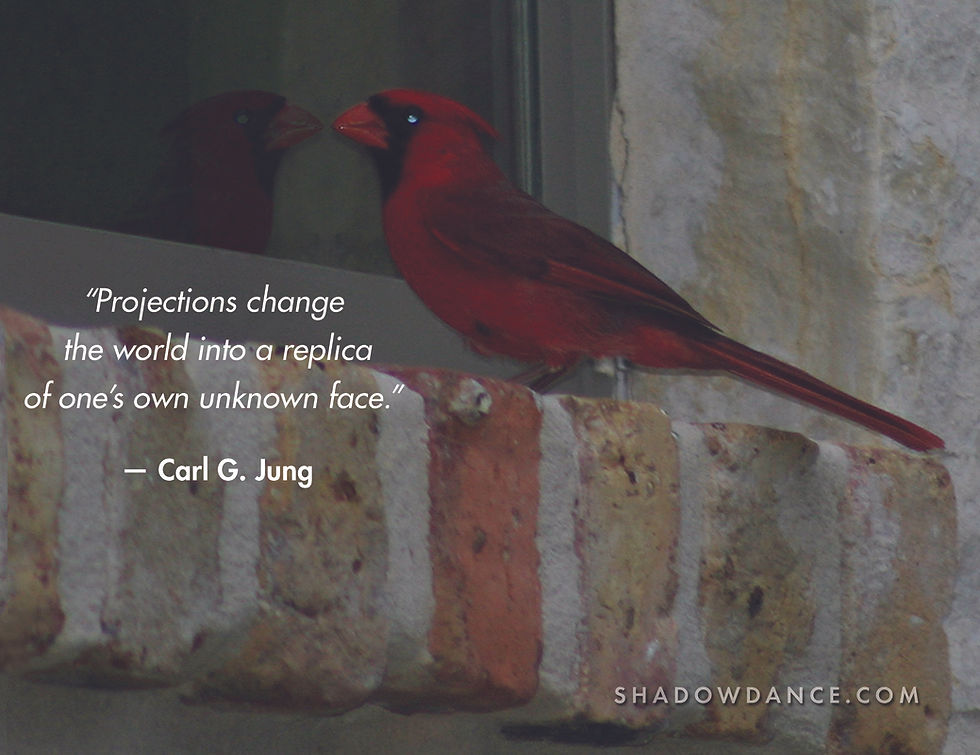
We cannot discover who we are in a vacuum. We need other people to awaken us, mirror us, fascinate us, frighten us, and sometimes break our hearts.
Through relationship, the unconscious gradually reveals the person we are capable of becoming. This may be the profound mystery of relationship: we need one another to become more fully ourselves, yet only when we begin to withdraw the projections we have placed upon others and recognize them as separate human beings can we begin to understand what it means to truly love.
We may love another person deeply, and the relationship may take many forms. Whether it becomes a lasting marriage, a friendship, a brief encounter, or something that never fully develops, its deeper purpose may still be to awaken a part of us that had not yet become conscious. The encounter may have occurred so that we could meet the transpersonal within ourselves and bring something previously hidden into consciousness.
In the end, these are all ways to love. Uranus teaches us to love what awakens and liberates the spirit. Neptune teaches us to love without requiring an illusion or fantasy to become real. Pluto teaches us to love with the body, with emotional honesty, and with the courage to become vulnerable without trying to control the result. The task is not to return to a state in which there is no separation. It is to discover a more conscious kind of union — one in which we can reach for the face of the person we love with tenderness and awe while still knowing: you are you, and I am me. Neither of us must disappear for true love to exist.
By becoming conscious of what these encounters awaken within us, we also contribute to the evolution of the collective. In this sense, God becomes conscious through us, and we become the living incarnation of transpersonal love.
NOTE: The following are brief descriptions of Uranus, Neptune, and Pluto and their meanings. If you were born with one of these planets in the 7th House or in aspect to Venus, these energies are not experienced only during a transit. They are woven into the way you love, relate, and encounter the Other throughout your life.
Uranus
Uranus represents freedom, awakening, individuality, disruption, and the need to break away from what has become stagnant. It brings sudden insights that challenge our familiar way of seeing ourselves and the world. Uranus awakens the part of us that refuses to live entirely according to convention or other people’s expectations. When unconscious, it may be projected onto someone who appears exciting, unpredictable, rebellious, or emotionally unavailable. We may then experience sudden attractions, separations, or changes that disturb our sense of security. Developing Uranus means allowing change and individuality without automatically destroying every form of commitment or stability.
Neptune
Neptune represents imagination, spirituality, compassion, longing, and the desire to transcend ordinary separateness. It opens us to dreams, symbols, creativity, intuition, and experiences of unity with something greater than ourselves. Neptune can soften rigid boundaries and deepen our capacity for empathy and unconditional love. When unconscious, however, it can create idealization, confusion, self-deception, sacrifice, or disappointment. We may project our longing for the divine onto another person and imagine that they will complete or save us. Developing Neptune means honoring our spiritual and imaginative nature while learning to distinguish genuine love from fantasy.
Pluto
Pluto represents instinctual power, emotional intensity, transformation, death, rebirth, and the hidden depths of the psyche. It brings us into contact with feelings and desires that the conscious personality may prefer not to acknowledge. Pluto exposes issues involving control, vulnerability, betrayal, sexuality, survival, and the fear of losing what we cannot bear to lose. When unconscious, it may be projected onto someone who appears powerful, dangerous, secretive, controlling, or irresistibly magnetic. Encounters with Pluto can strip away illusions and force us to recognize the shadow within ourselves. Developing Pluto means reclaiming our buried power and allowing profound experience to transform rather than possess us.
A note for new readers: Words such as shadow, projection, individuation, and the Self come from Jung’s psychology. I have made a Jungian vocabulary guide called Dictionary of Terms available for free on my website. It also appears in my latest book, When the Other Is You: Love Beyond Projection — The Alchemy of Relationship in the Age of Aquarius.
- ONGOING SHADOW WORK/ASTROLOGICAL COACHING SESSIONS -
“Working with Rebeca Eigen over the last five months has been one of the most transformative experiences of my life. Through her deep understanding of Jungian psychology, astrology, shadow work, and relationship dynamics, she has helped me navigate one of the most painful and challenging periods I have ever faced.
What makes Rebeca extraordinary is the way she combines profound insight with honesty, vulnerability, and humor. Our long-term work together has helped me understand myself more deeply than years of traditional talk therapy ever had. Through exploring my chart, my shadow, and my marriage, I gained clarity, compassion, and a completely new perspective on myself, my partner, and the opportunities for growth within relationship.”
— Lisa H, Vacaville, California


Comments