

The Soul’s Mirror: Jungian Psychology, Astrology, and Relationship Shadow Work

Understanding ourselves and our relationships requires looking beneath the surface. In intimate relationships, we often meet not only the other person, but the hidden, rejected, and undeveloped parts of ourselves. This is why relationship can become such a powerful path of awakening.
Carl Jung taught that the shadow contains the parts of the personality we do not yet recognize, accept, or consciously live. Astrology gives us a symbolic map of the psyche, revealing the patterns, needs, conflicts, and projections we bring into relationship. Together, Jungian psychology and Astrology offer a profound way to understand why we are drawn to certain people, why we repeat painful patterns, and how love can become a path toward wholeness.
This is the essence of relationship shadow work: learning to see what the other person is mirroring back to us. In my Jungian/astrological approach, the 7th House becomes especially important because it shows the qualities we often seek, admire, resist, or project onto others. What we cannot yet own in ourselves frequently appears through partners, friends, enemies, and the people who affect us most deeply.
When we begin to recognize these patterns, relationship becomes more than compatibility or conflict. It becomes the Soul’s Mirror.
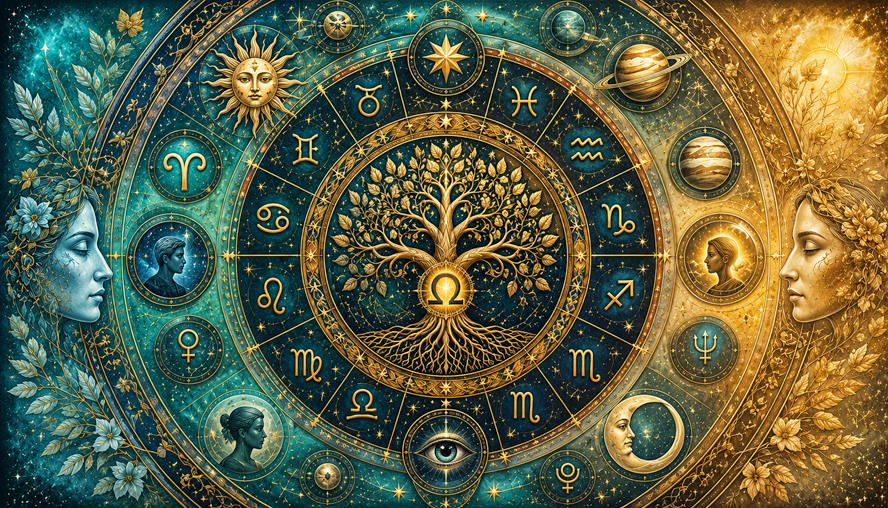
What Jungian Psychology Reveals About the Self
Carl Jung gave us a way to understand the unconscious mind and the powerful influence it has on our behavior, our choices, and our relationships. Central to his psychology is the idea of the shadow — the parts of ourselves that are unconscious, repressed, denied, or hidden from awareness because they feel unacceptable, uncomfortable, or unsafe to express.
Many of these shadow qualities are formed early in life. From the time we are children, we are shaped by what our parents, guardians, teachers, culture, and religion tell us is acceptable or unacceptable. When we are told, directly or indirectly, “Don’t be like that,” certain parts of our natural self begin to go underground. But they do not disappear. They remain below the surface until we are ready to reclaim these lost, wounded, or undeveloped parts of ourselves.
Knowing our shadow gives us substance, depth, and character. We do not have to spend our lives trying to fit into what others expect us to be. We are here to become who we are. In my experience, there is no better symbolic tool for examining the total self than Astrology, because the birth chart reveals not only our conscious gifts, but also the hidden patterns, conflicts, and unlived potentials asking to be brought into awareness.
The shadow contains traits, instincts, desires, longings, and potentials we may not yet acknowledge. It influences our actions and reactions, especially in intimate relationships, where another person can so easily become the mirror for what we have not yet seen in ourselves. Bringing the shadow into consciousness helps us become more whole, authentic, and capable of real relationship.
Jung also described the collective unconscious as the deeper layer of the psyche that contains universal patterns of human experience. He called these patterns archetypes. Astrologers understand these archetypal forces through the Planets. The Sun, Moon, Mercury, Venus, Mars, Jupiter, Saturn, Uranus, Neptune, and Pluto are not merely objects in the sky; symbolically, they describe living principles within the psyche. They appear in our dreams, myths, relationships, conflicts, and creative callings, guiding how we relate to ourselves, to others, and to the unfolding mystery of life.
Astrology as a Map of Inner Patterns
Astrology offers a symbolic language for understanding personality traits, emotional needs, life challenges, and unconscious patterns. Each zodiac sign, Planet, house placement, and aspect reflects a different dimension of the psyche. From the moment of birth, each of us arrives with a unique birth chart, and no two people can be understood by a Sun sign alone.
This is why Sun sign columns and Pinterest-type astrology cheat sheets can never explain the complexity of the individual. One Gemini may have the Moon in Scorpio, making that person far more emotionally intense, private, and penetrating than a Gemini with the Moon in Libra. Another Gemini may have the Sun in hard aspect to Saturn or Pluto, while also receiving a flowing aspect from Jupiter. Each of these configurations changes the expression of the Sun. What we read in Sun sign descriptions may contain a seed of truth, but it is never the whole person.
To understand the whole person, we need the birth chart, calculated from the day, time, and place of birth. The chart becomes a symbolic blueprint of tendencies, potentials, conflicts, gifts, and unconscious patterns. It shows how the different parts of the psyche relate to one another, where there may be ease, where there may be tension, and where life continually asks us to become more conscious.
Certain planetary placements can also reveal shadow material. They may point to fears, defenses, unresolved conflicts, inherited patterns, or qualities we have not yet learned to express in a healthy way. Astrology encourages self-reflection because it helps us see the deeper patterns beneath our reactions, choices, attractions, and relationship struggles.
For example, a person with a strong Mars influence may struggle with anger, desire, competition, or assertiveness. If Mars has been shamed or repressed, natural instinct and healthy self-assertion may become shadow material. On the other hand, a person with a strong Pluto influence may be drawn toward depth, truth, transformation, and life’s mysteries. Pluto does not usually skim the surface. It is often unafraid to call a spade a spade, but if unconscious, it can also express through control, intensity, obsession, or power struggles.
In this way, Astrology does not reduce us to a type. It opens a symbolic map of the whole psyche. It shows us not only who we think we are, but also the hidden, unlived, and undeveloped parts of ourselves that are asking to be brought into consciousness.
Benefits of Integrating Jungian Psychology and Astrology in Relationship Work
Carl Jung understood that fascination, attraction, and emotional intensity are not random. They arise from the unconscious and are always part of a relationship dynamic between two people.
“A fascination of this kind is never exercised exclusively by one person upon another; it is always a phenomenon of relationship, which requires two people in so far as the person fascinated necessarily has a corresponding disposition. But the disposition must be unconscious, or no fascination will take place. Fascination is a compulsive phenomenon in the sense that it lacks a conscious motive; it is not a voluntary process, but something that rises up from the unconscious and forcibly obtrudes itself upon the conscious mind.” — Carl G. Jung, CW 7: Two Essays on Analytical Psychology, Par. 136
This is exactly why intimate relationships are such powerful mirrors. We may think we are simply attracted, irritated, fascinated, disappointed, or hurt by another person, but Jung reminds us that something deeper is often taking place. The other person constellates something already present within us, though still unconscious. Astrology helps us see the symbolic pattern behind this fascination. Jungian psychology helps us understand why it carries such emotional force.
When these two systems are brought together, relationship work becomes a path of self-knowledge rather than blame. We begin to see beyond surface behavior and ask deeper questions: What part of me is being awakened here? What am I projecting? What old wound is being touched? What unlived quality is trying to come into consciousness? This kind of awareness deepens empathy, reduces reactive patterns, and allows both people to become more authentic. The purpose is not simply to “fix” the relationship, but to become more whole through what the relationship reveals. This integration supports a journey toward wholeness, both individually and as a couple.


Comments